Details of reconstructing 27 airports across Iran after war outlined
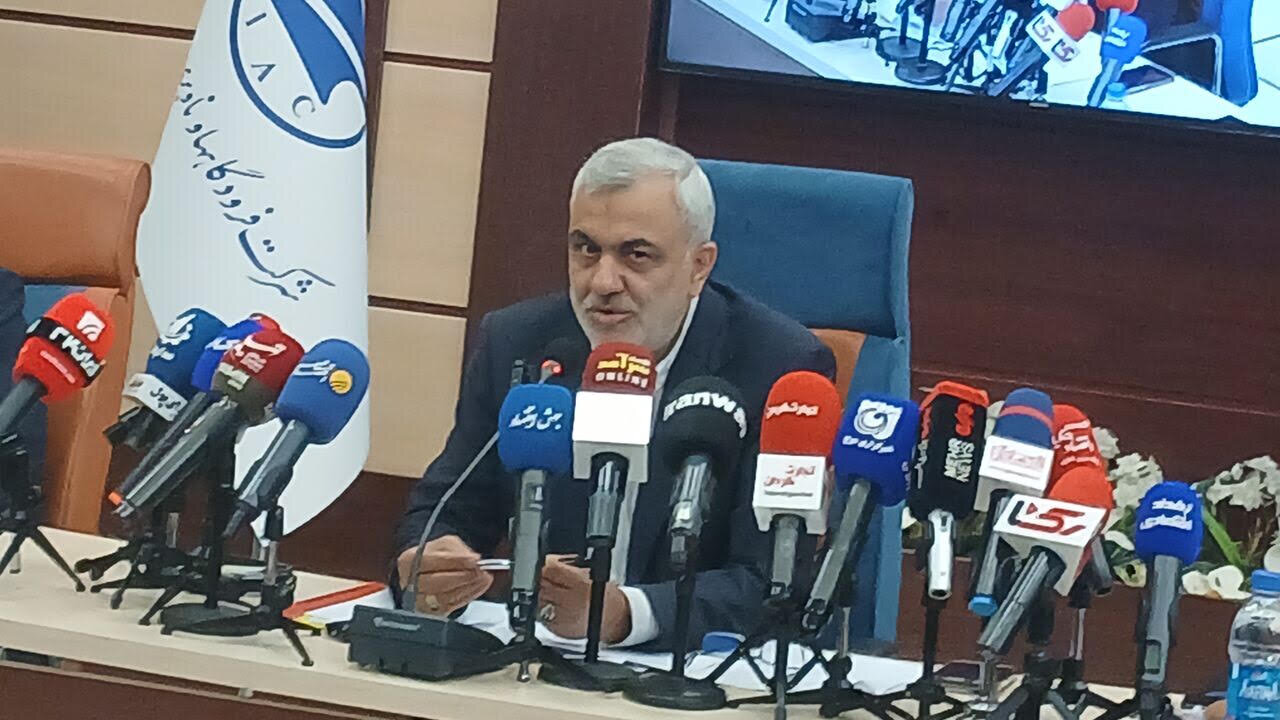
TEHRAN- The CEO of Iran Airports and Air Navigation Company, outlining the jihad-style efforts undertaken after the ceasefire, reported the rapid reconstruction of runways and navigation systems at 27 damaged airports across the country, relying on the expertise of domestic personnel and collaboration with knowledge-based companies.
According to IRNA, Morteza Dehghan stated on Monday at a press conference, emphasizing the hopeful message of self-reliance and the capabilities of domestic experts: "Today, relying on the expertise of domestic specialists at Iran Airports and Air Navigation Company, aviation services are being provided with authority across various specialized sectors; because this company bears a heavy and exclusive responsibility both in airport management and infrastructure, and in air navigation and air traffic control."
He said: "Our colleagues in both the airport and air navigation sectors stood firm with all their might and authority, and the people were able to witness the safe and uninterrupted resumption of aviation services in the country's skies immediately after the ceasefire."
The Deputy Minister of Roads and Urban Development added: "From the very beginning when the ceasefire was discussed, our anticipation and expectation was that aviation would be considered as the priority and primary demand of the country's economy; because for the reconstruction of any sector and to get the wheels of the economy moving, the first area that must be activated is aviation and airports."
The CEO of Iran Airports and Air Navigation Company emphasized: "For various economic sectors of the country to resume normal activity and serve the people, timely entry by the aviation sector was essential, and in this regard, Iran Airports and Air Navigation Company was at the forefront."
He said: "We must always stay several steps ahead of other aviation sectors; because until ground infrastructure at airports and aviation infrastructure in the skies—including air navigation and air traffic control—are prepared by the specialists of this company, no airline will be able to provide services and operate flights, and this made our responsibility far heavier and more critical."
Dehghan noted: "The main battle for the airports company actually began after the ceasefire was announced; because despite the extensive scale of damages, we had to immediately resume services to the country."
He added: "Contrary to all international laws, regulations, and conventions, heavy and unjust damages were inflicted on the country's civil aviation infrastructure, and approximately 27 airports were damaged during the aggression."
He said: "Various sections were targeted, including runways, taxiways, aprons and aircraft parking areas, safety and firefighting buildings—which are directly responsible for saving human lives—navigation and aid-to-navigation equipment, inspection assistance devices, and passenger terminals; that is, everything used at airports to ensure passenger safety and security was damaged."
The CEO of Iran Airports and Air Navigation Company continued: "Despite this scale of destruction, the main strategy and emphasis of the Ministry of Transport and Urban Development and the esteemed government was that these infrastructures should immediately return to operational status, and this major mission was executed by prioritizing two main objectives."
He added: "Our first priority was the complete and flawless observance of safety standards, both in runway surfaces and in navigation systems and air traffic control. Fortunately, there is very high technical, engineering, and execution capacity in the country, among consultants, contractors, and especially the company's own specialists."
He said: "From the very first days, our colleagues began reconstructing runways and pavements to prepare the necessary conditions for safe takeoffs and landings; simultaneously, the improvement and reconstruction of navigation systems and aviation equipment also commenced."
Dehghan stated: "In the first step, the company's air navigation specialists were able to support existing systems and reconstruct damaged equipment and make them operational; because conducting any flight without these navigation and airport infrastructures is impossible."
He added: "The second focus of our actions was utilizing the capacity of knowledge-based companies and the domestic private sector—entities with which we had begun joint cooperation for the localization of aviation equipment and systems in previous years. Although some of these companies' facilities were also damaged in the war, the necessary infrastructure was provided to them, and they stood alongside the airports company's experts."
He stated: "The flights now being conducted in complete safety in the country's skies are the result of the round-the-clock and coordinated efforts of these groups."
The CEO of Iran Airports and Air Navigation Company, praising the dedication of operational personnel, emphasized: "A very prominent issue during this period was the jihadist spirit and attitude of our colleagues; this sacrifice was not merely an administrative duty. Our colleagues, while drones were present in the skies, evacuated vital and essential equipment from control towers and technical blocks and transferred them to safe locations to prevent damage, so that after conditions stabilized, they could quickly bring the systems back online."
He added: "Committed contractors across the country also stood by us, and in some cases, they began improvement operations even without formal contracts or receiving payment. This self-sacrifice and national solidarity deserve to be recorded in history."
Dehghan noted: "Although the efforts of jihadist forces in reconstructing urban residential areas were rightly reflected by the media, these self-sacrificing and epic-making actions also took place with equal strength in the specialized fields of the aviation industry, deserving narration and preservation."
Financing solutions for airport reconstruction through asset monetization and BOT models
The CEO of Iran Airports and Air Navigation Company, outlining modern financing methods to compensate for damages and reconstruct aviation infrastructure, reported the equipping of the country's airspace with advanced world-class surveillance systems and the full restoration of international confidence in Iran's skies.
Regarding how to secure financial resources for the reconstruction of damaged airports, he stated: "The airports company, as an independent revenue-expenditure entity, relies on revenues from domestic flights and overflights; therefore, the sudden halt of flights during the crisis led to the loss of current revenues and imposed heavy damages."
Dehghan said: "In the first step, we implemented optimized resource management and pursued the collection of domestic and foreign receivables in both foreign currency and rials; and in the next step, with the support of the esteemed government, we secured the necessary credit for purchasing sensitive foreign navigation, aid-to-navigation, and surveillance equipment, alongside domestic production capacity."
He added: "Despite the temporary suspension of construction projects during wartime, immediately after operational conditions stabilized, the reactivation of development projects began with precise prioritization."
The Deputy Minister of Transport and Urban Development emphasized: "Utilizing the legal capacities of 'asset monetization' was one of our main approaches, and with the authorities granted by the government, the airports company was at the forefront of this area, and we were able to activate several important projects through this method."
He said: "In addition to attracting resources and facilities from the country's banking network, diversifying financing methods by attracting private sector investment through BOT, BLT, and BOO contractual models has been placed on the company's serious agenda to accelerate project implementation."
Dehghan, referring to turning threats into opportunities during the reconstruction process, stated: "These developments created an opportunity to move beyond traditional methods and advance the modernization of systems in line with the latest standards and master plans of the International Civil Aviation Organization (ICAO)."
Deployment of modern surveillance systems
He added: "In the past, monitoring the country's airspace was mainly reliant on primary and secondary radars (PSR and SSR), but now we have moved toward deploying modern surveillance systems, including Multilateration (MLAT) and Automatic Dependent Surveillance–Broadcast (ADS-B). These systems, alongside radars, significantly increase the monitoring accuracy of air traffic controllers."
He said: "Our number one priority and red line in all processes is 'aviation safety,' and despite the security challenges imposed on the region, our country's airspace is serving domestic and overflight traffic with complete standards approved by ICAO and the Civil Aviation Organization."
The CEO of Iran Airports and Air Navigation Company concluded: "The rapid confidence of foreign airlines in reusing Iran's skies after the resolution of tensions demonstrates the full assurance of the international aviation community in the quality of air traffic control and air navigation services of the Islamic Republic of Iran—a major achievement realized through the round-the-clock efforts of domestic specialists and government measures."
The CEO of Iran Airports and Air Navigation Company, emphasizing the utilization of the country's privileged geopolitical position, reported the creation of cross-sectoral coordination to shorten air routes and the provision of financial incentives to domestic airlines.
Regarding strategies to increase the attractiveness of the country's airspace for overflights, Dehghan stated: "We enjoy a strategic and privileged geopolitical position; although powerful airport hubs and regional competitors have formed around us that constantly try to challenge our market share."
He said: "Through excellent interaction and coordination established between the country's civilian and military sectors, we succeeded in creating two-way air routes along the east-west and southern axes of the country, and now in the post-war period, we have achieved greater consensus and synergy to further shorten these routes."
He added: "To increase the attractiveness of the country's skies, 'service sustainability' has been placed on the agenda as the second principle, so that airlines gain full confidence in the continuous and permanent provision of our services; fortunately, airlines have now achieved this assurance."
Dehghan emphasized: "A specialized team comprising air navigation, financial, and commercial experts has been formed within the company, continuously negotiating with international airlines. This team, while accurately informing them about the high level of safety and quality of air traffic control services in Iran, also offers the necessary financial incentives, utilizing legal capacities, to maximize the attraction of overflight traffic."
EF/MA
Leave a Comment